
Granitt er en type magmatisk bergart som utvinnes for sin ekstreme styrke, tetthet, holdbarhet og korrosjonsmotstand. Men granitt er også svært allsidig – den er ikke bare for firkanter og rektangler! Faktisk jobber vi jevnlig med granittkomponenter konstruert i former, vinkler og kurver i alle varianter – med utmerkede resultater.
Takket være vår toppmoderne prosessering kan kuttede overflater bli usedvanlig flate. Disse egenskapene gjør granitt til det ideelle materialet for å lage maskinbaser og målekomponenter i spesialstørrelse og -design. Granitt er:
■ maskinbearbeidbar
■ helt flatt når det er kuttet og ferdig
■ rustbestandig
■ slitesterk
■ langvarig
Granittkomponenter er også enkle å rengjøre. Når du lager spesialtilpassede design, sørg for å velge granitt på grunn av dens overlegne fordeler.
STANDARDER / BRUKSOMRÅDER MED HØY SLITASJE
Granitten som ZHHIMG bruker til våre standard overflateplateprodukter har et høyt kvartsinnhold, noe som gir større motstand mot slitasje og skader. Våre Superior Black-farger har lav vannabsorpsjon, noe som minimerer muligheten for at presisjonsmålerne ruster når de festes på platene. Granittfargene som ZHHIMG tilbyr, resulterer i mindre gjenskinn, noe som betyr mindre øyebelastning for personer som bruker platene. Vi har valgt granitttypene våre med tanke på termisk ekspansjon for å holde dette aspektet minimalt.
TILPASSEDE APPLIKASJONER
Når applikasjonen din krever en plate med tilpassede former, gjengede innlegg, spor eller annen maskinering, bør du velge et materiale som Black Jinan Black. Dette naturlige materialet gir overlegen stivhet, utmerket vibrasjonsdemping og forbedret maskinbearbeidbarhet.
Det er viktig å merke seg at farge alene ikke er en indikasjon på steinens fysiske egenskaper. Generelt sett er granittens farge direkte relatert til tilstedeværelsen eller fraværet av mineraler, som kanskje ikke har noen betydning for egenskapene som gjør et godt overflateplatemateriale. Det finnes rosa, grå og svarte granitter som er utmerkede for overflateplater, samt svarte, grå og rosa granitter som er fullstendig uegnet for presisjonsapplikasjoner. De kritiske egenskapene til granitt, når det gjelder bruken som overflateplatemateriale, har ingenting med farge å gjøre, og er som følger:
■ Stivhet (nedbøyning under belastning - indikert av elastisitetsmodul)
■ Hardhet
■ Tetthet
■ Slitasjemotstand
■ Stabilitet
■ Porøsitet
Vi har testet mange granittmaterialer og sammenlignet dem. Endelig har vi kommet frem til at Jinan svart granitt er det beste materialet vi noen gang har kjent til. Indisk svart granitt og sørafrikansk granitt ligner på Jinan svart granitt, men de fysiske egenskapene deres er dårligere enn Jinan svart granitt. ZHHIMG vil fortsette å lete etter flere granittmaterialer i verden og sammenligne deres fysiske egenskaper.
For å snakke mer om granitten som passer for prosjektet ditt, ta kontakt med ossinfo@zhhimg.com.
Ulike produsenter bruker forskjellige standarder. Det finnes mange standarder i verden.
DIN-standarden, ASME B89.3.7-2013 eller føderal spesifikasjon GGG-P-463c (granittoverflateplater) og så videre som grunnlag for spesifikasjonene deres.
Og vi kan produsere presisjonsinspeksjonsplater i granitt i henhold til dine krav. Ta gjerne kontakt med oss hvis du vil vite mer informasjon om flere standarder.
Planhet kan betraktes som at alle punkter på overflaten befinner seg innenfor to parallelle plan, grunnplanet og takplanet. Målingen av avstanden mellom planene er overflatens totale planhet. Denne planhetsmålingen har vanligvis en toleranse og kan inkludere en karakterbetegnelse.
For eksempel er flathetstoleransene for tre standardkvaliteter definert i den føderale spesifikasjonen som bestemt av følgende formel:
■ Laboratoriekvalitet AA = (40 + diagonal i kvadrat/25) x 0,000001" (ensidig)
■ Inspeksjonsgrad A = Laboratoriegrad AA x 2
■ Verktøyrom karakter B = Laboratoriekarakter AA x 4.
For overflateplater i standard størrelse garanterer vi planhetstoleranser som overgår kravene i denne spesifikasjonen. I tillegg til planhet tar ASME B89.3.7-2013 og føderal spesifikasjon GGG-P-463c opp emner som: nøyaktighet av gjentatt måling, materialegenskaper til overflateplategranitter, overflatefinish, plassering av støttepunkter, stivhet, akseptable inspeksjonsmetoder, installasjon av gjengede innsatser osv.
ZHHIMG-overflateplater og inspeksjonsplater i granitt oppfyller eller overgår alle kravene som er angitt i denne spesifikasjonen. For øyeblikket finnes det ingen definerende spesifikasjon for vinkelplater, paralleller eller masterkvadrater i granitt.
Og du finner formlene for andre standarder iLAST NED.
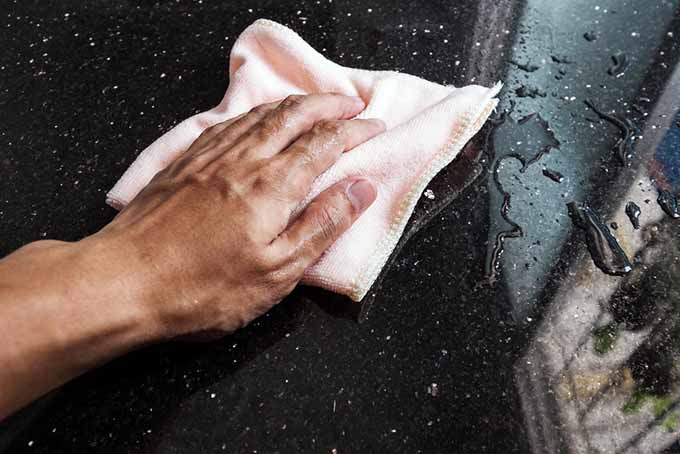
For det første er det viktig å holde platen ren. Luftbårent slipemiddel er vanligvis den største kilden til slitasje på en plate, da det har en tendens til å feste seg i arbeidsstykker og kontaktflatene på måleinstrumenter. For det andre, dekk til platen for å beskytte den mot støv og skader. Levetiden kan forlenges ved å dekke til platen når den ikke er i bruk, ved å rotere platen med jevne mellomrom slik at et enkelt område ikke blir overdreven brukt, og ved å erstatte stålkontaktputer på måleinstrumenter med karbidputer. Unngå også å sette mat eller brus på platen. Merk at mange brus inneholder enten kullsyre eller fosforsyre, som kan løse opp de mykere mineralene og etterlate små groper i overflaten.
Dette avhenger av hvordan tallerkenen brukes. Hvis mulig anbefaler vi å rengjøre tallerkenen i begynnelsen av dagen (eller arbeidsskiftet) og igjen på slutten. Hvis tallerkenen blir skitten, spesielt med oljete eller klissete væsker, bør den sannsynligvis rengjøres umiddelbart.
Rengjør platen regelmessig med flytende eller vannfri ZHHIMG overflaterens. Valg av rengjøringsmidler er viktig. Hvis det brukes et flyktig løsemiddel (aceton, lakkfortynner, alkohol osv.), vil fordampningen avkjøle overflaten og forvrenge den. I dette tilfellet er det nødvendig å la platen normalisere seg før bruk, ellers vil det oppstå målefeil.
Hvor lang tid det tar for at platen skal normalisere seg, vil variere med størrelsen på platen og hvor mye den kjøles ned. En time bør være tilstrekkelig for mindre tallerkener. To timer kan være nødvendig for større tallerkener. Hvis det brukes et vannbasert rengjøringsmiddel, vil det også bli noe fordampningskjøling.
Platen vil også holde på vannet, og dette kan føre til rust på metalldeler som er i kontakt med overflaten. Noen rengjøringsmidler vil også etterlate et klebrig reststoff etter at de tørker, noe som vil tiltrekke seg svevet støv og faktisk øke slitasjen, snarere enn å redusere den.
Dette avhenger av platens bruk og miljø. Vi anbefaler at en ny plate eller presisjonstilbehør til granitt gjennomgår en fullstendig rekalibrering innen ett år etter kjøp. Hvis granittoverflateplaten vil bli utsatt for mye bruk, kan det være lurt å forkorte dette intervallet til seks måneder. Månedlig inspeksjon for gjentatte målefeil ved hjelp av et elektronisk vater eller lignende enhet vil vise eventuelle utviklende slitasjepunkter og tar bare noen få minutter å utføre. Etter at resultatene av den første rekalibreringen er bestemt, kan kalibreringsintervallet forlenges eller forkortes etter hva som er tillatt eller påkrevd av ditt interne kvalitetssystem.
Vi kan tilby tjenester som hjelper deg med å inspisere og kalibrere granittoverflateplaten din.

Det er flere mulige årsaker til variasjoner mellom kalibreringer:
- Overflaten ble vasket med en varm eller kald løsning før kalibrering, og fikk ikke tilstrekkelig tid til å normalisere seg
- Platen er feil støttet
- Temperaturendring
- Utkast
- Direkte sollys eller annen strålevarme på overflaten av platen. Sørg for at takbelysning ikke varmer opp overflaten.
- Variasjoner i den vertikale temperaturgradienten mellom vinter og sommer (Hvis det er mulig, kjenn den vertikale gradienttemperaturen når kalibreringen utføres.)
- Platen fikk ikke tilstrekkelig tid til å normalisere seg etter forsendelse
- Feil bruk av inspeksjonsutstyr eller bruk av ikke-kalibrert utstyr
- Overflateforandring som følge av slitasje
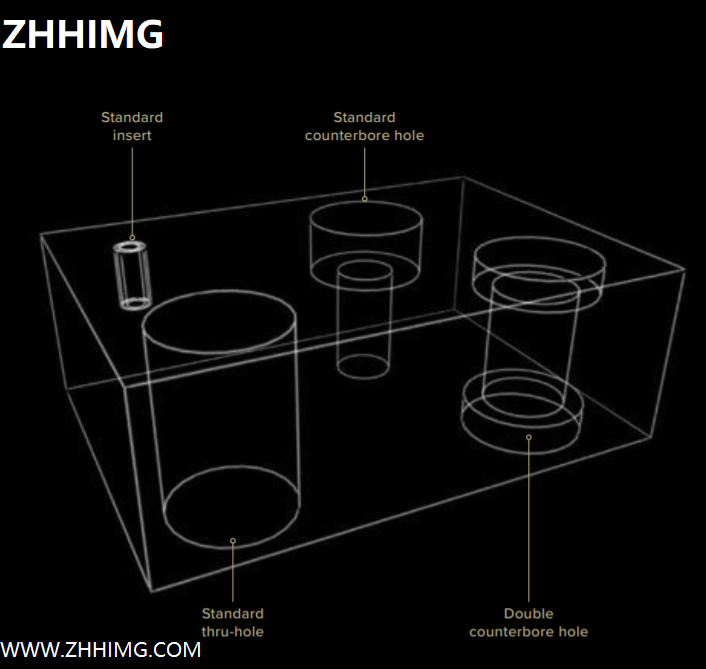
Hvor mange typer hull på presisjonsgranitt?
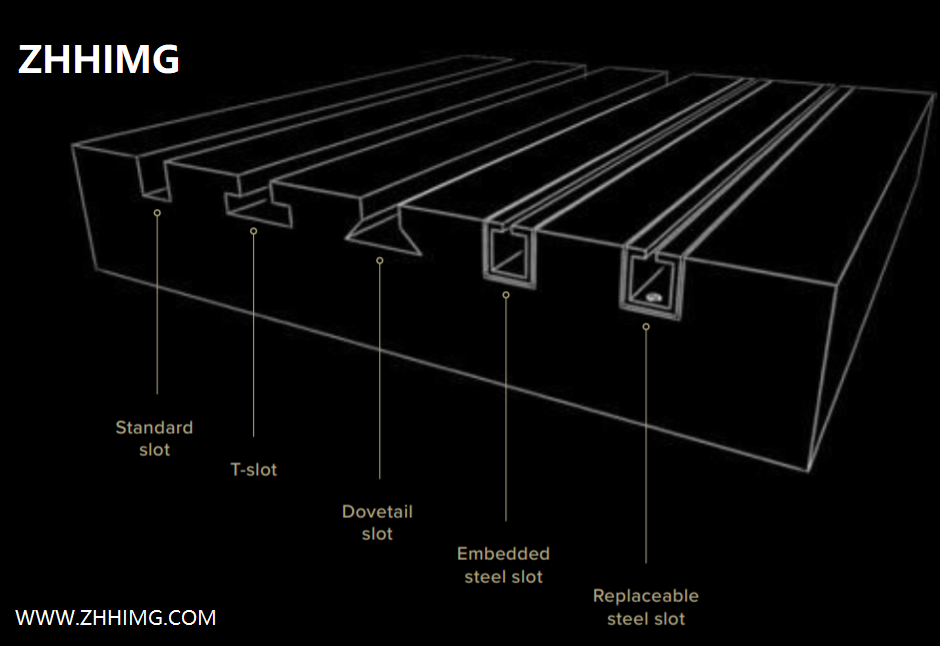
Spor på presisjonsgranittkomponenter
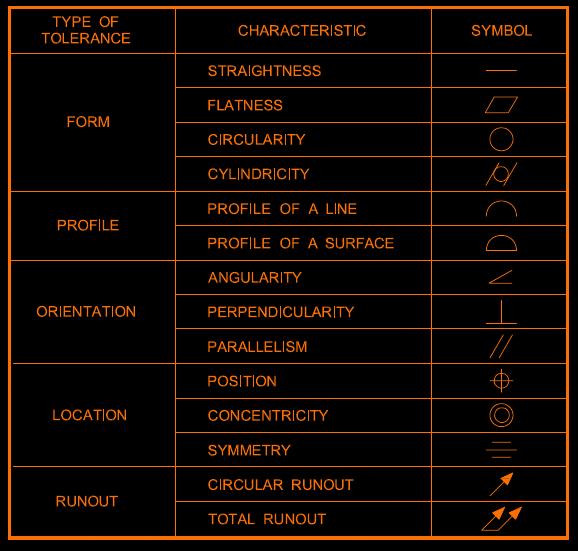
For mange fabrikker, inspeksjonsrom og laboratorier brukes presisjonsgranittoverflateplater som grunnlag for nøyaktig måling. Fordi hver lineær måling avhenger av en nøyaktig referanseflate som de endelige dimensjonene tas fra, gir overflateplater det beste referanseplanet for arbeidsinspeksjon og layout før maskinering. De er også ideelle grunnlag for å foreta høydemålinger og måle overflater. Videre gjør en høy grad av flathet, stabilitet, generell kvalitet og utførelse dem til et godt valg for montering av sofistikerte mekaniske, elektroniske og optiske målesystemer. For alle disse måleprosessene er det viktig å holde overflateplatene kalibrert.
Gjenta målinger og flathet
Både planhet og gjentatte målinger er avgjørende for å sikre en presisjonsoverflate. Planhet kan betraktes som at alle punkter på overflaten er innenfor to parallelle plan, basisplanet og takplanet. Målingen av avstanden mellom planene er overflatens totale planhet. Denne planhetsmålingen har vanligvis en toleranse og kan inkludere en karakterbetegnelse.
Flathetstoleransene for tre standardkvaliteter er definert i den føderale spesifikasjonen som bestemt av følgende formel:
DIN-standard, GB-standard, ASME-standard, JJS-standard ... forskjellige land med forskjellige standpunkter ...
Mer informasjon om standarden.
I tillegg til flathet må repeterbarhet sikres. En gjentatt måling er en måling av lokale flathetsområder. Det er en måling tatt hvor som helst på overflaten av en plate som vil gjentas innenfor den angitte toleransen. Å kontrollere lokal flathet til en strengere toleranse enn den generelle flatheten garanterer en gradvis endring i overflatens flathetsprofil, og minimerer dermed lokale feil.
For å sikre at en overflateplate oppfyller både spesifikasjonene for flathet og gjentatte målinger, bør produsenter av granittoverflateplater bruke den føderale spesifikasjonen GGG-P-463c som grunnlag for sine spesifikasjoner. Denne standarden omhandler nøyaktighet for gjentatte målinger, materialegenskaper til granittoverflateplater, overflatefinish, plassering av støttepunkter, stivhet, akseptable inspeksjonsmetoder og installasjon av gjengede innsatser.
Kontrollerer platens nøyaktighet
Ved å følge noen få enkle retningslinjer, bør en investering i en granittoverflateplate vare i mange år. Avhengig av platenes bruk, verkstedmiljø og nødvendig nøyaktighet, varierer hyppigheten av kontroll av overflateplatens nøyaktighet. En generell tommelfingerregel er at en ny plate skal gjennomgå en fullstendig rekalibrering innen ett år etter kjøp. Hvis platen brukes ofte, anbefales det å forkorte dette intervallet til seks måneder.
Før en overflateplate er slitt utover spesifikasjonen for generell flathet, vil den vise slitte eller bølgete stenger. Månedlig inspeksjon for gjentatte målefeil ved bruk av en gjentatt avlesningsmåler vil identifisere slitasjepunkter. En gjentatt avlesningsmåler er et høypresisjonsinstrument som oppdager lokale feil og kan vises på en elektronisk forsterker med høy forstørrelse.
Et effektivt inspeksjonsprogram bør inkludere regelmessige kontroller med en autokollimator, som gir faktisk kalibrering av den totale flatheten sporbar til National Institute of Standards and Technology (NIST). Omfattende kalibrering av produsenten eller et uavhengig selskap er nødvendig fra tid til annen.
Variasjoner mellom kalibreringer
I noen tilfeller er det variasjoner mellom kalibreringene av overflateplatene. Noen ganger kan faktorer som overflateforandringer som følge av slitasje, feil bruk av inspeksjonsutstyr eller bruk av ukalibrert utstyr forklare disse variasjonene. De to vanligste faktorene er imidlertid temperatur og støtte.
En av de viktigste variablene er temperaturen. For eksempel kan overflaten ha blitt vasket med en varm eller kald løsning før kalibrering og ikke fått tilstrekkelig tid til å normalisere seg. Andre årsaker til temperaturendringer inkluderer trekk av kald eller varm luft, direkte sollys, takbelysning eller andre kilder til strålevarme på overflaten av platen.
Det kan også være variasjoner i den vertikale temperaturgradienten mellom vinter og sommer. I noen tilfeller får ikke platen tilstrekkelig tid til å normalisere seg etter forsendelse. Det er lurt å registrere den vertikale gradienttemperaturen når kalibreringen utføres.
En annen vanlig årsak til kalibreringsvariasjon er en plate som er feil støttet. En overflateplate bør støttes på tre punkter, ideelt sett plassert 20 % av lengden inn fra endene av platen. To støtter bør plasseres 20 % av bredden inn fra langsidene, og den gjenværende støtten bør være sentrert.
Bare tre punkter kan hvile solid på noe annet enn en presisjonsoverflate. Hvis du prøver å støtte platen på mer enn tre punkter, vil platen motta støtte fra forskjellige kombinasjoner av tre punkter, som ikke vil være de samme tre punktene som den ble støttet på under produksjonen. Dette vil føre til feil ettersom platen bøyer seg for å tilpasse seg det nye støttearrangementet. Vurder å bruke stålstativer med støttebjelker som er utformet for å være på linje med de riktige støttepunktene. Stativer for dette formålet er vanligvis tilgjengelige fra produsenten av overflateplaten.
Hvis platen er riktig støttet, er presis nivellering bare nødvendig hvis en applikasjon spesifiserer det. Nivellering er ikke nødvendig for å opprettholde nøyaktigheten til en riktig støttet plate.
Forleng platens levetid
Å følge noen få retningslinjer vil redusere slitasje på en granittoverflateplate og til slutt forlenge levetiden.
Først er det viktig å holde platen ren. Luftbårent slipemiddel er vanligvis den største kilden til slitasje på en plate, ettersom det har en tendens til å sette seg fast i arbeidsstykker og kontaktflatene til målere.
Det er også viktig å dekke til platene for å beskytte dem mot støv og skader. Levetiden kan forlenges ved å dekke til platen når den ikke er i bruk.
Roter platen med jevne mellomrom, slik at et enkelt område ikke blir overbelastet. Det anbefales også å bytte ut stålkontaktputer på måleinstrumenter med hardmetallputer.
Unngå å sette mat eller brus på tallerkenen. Mange brus inneholder enten kullsyre eller fosforsyre, som kan løse opp de mykere mineralene og etterlate små groper i overflaten.
Hvor man skal få tilbakefall
Når en granittplate trenger ny overflatebehandling, bør du vurdere om du skal få denne tjenesten utført på stedet eller på kalibreringsanlegget. Det er alltid å foretrekke å få platen slipt på nytt på fabrikken eller et dedikert anlegg. Hvis platen imidlertid ikke er for slitt, vanligvis innenfor 0,001 tommer av den nødvendige toleransen, kan den bli slipt på nytt på stedet. Hvis en plate er slitt til det punktet at den er mer enn 0,001 tommer utenfor toleransen, eller hvis den er sterkt gropt eller hakket, bør den sendes til fabrikken for sliping før ny sliping.
Et kalibreringsanlegg har utstyret og fabrikkinnstillingene som gir optimale forhold for riktig platekalibrering og omarbeiding om nødvendig.
Det bør utvises stor forsiktighet ved valg av en tekniker for kalibrering og overflatebehandling på stedet. Be om akkreditering og bekreft at utstyret teknikeren skal bruke har en sporbar kalibrering. Erfaring er også en viktig faktor, da det tar mange år å lære å slipe presisjonsgranitt riktig.
Kritiske målinger starter med en presisjons granittoverflateplate som et grunnlag. Ved å sikre en pålitelig referanse ved å bruke en riktig kalibrert overflateplate, har produsenter et av de viktigste verktøyene for pålitelige målinger og deler av bedre kvalitet.Q
Sjekkliste for kalibreringsvariasjoner
1. Overflaten ble vasket med en varm eller kald løsning før kalibrering og fikk ikke tilstrekkelig tid til å normalisere seg.
2. Platen er ikke støttet riktig.
3. Temperaturendring.
4. Utkast.
5. Direkte sollys eller annen strålevarme på overflaten av platen. Sørg for at takbelysning ikke varmer opp overflaten.
6. Variasjoner i den vertikale temperaturgradienten mellom vinter og sommer. Hvis det er mulig, kjenn den vertikale gradienttemperaturen når kalibreringen utføres.
7. Platen fikk ikke tilstrekkelig tid til å normalisere seg etter forsendelse.
8. Feil bruk av inspeksjonsutstyr eller bruk av ikke-kalibrert utstyr.
9. Overflateforandring som følge av slitasje.
Tekniske tips
- Fordi hver lineær måling avhenger av en nøyaktig referanseflate som de endelige dimensjonene tas fra, gir overflateplater det beste referanseplanet for arbeidsinspeksjon og layout før maskinering.
- Å kontrollere den lokale flatheten til en strengere toleranse enn den generelle flatheten garanterer en gradvis endring i overflatens flathetsprofil, og minimerer dermed lokale feil.
- Et effektivt inspeksjonsprogram bør inkludere regelmessige kontroller med en autokollimator, som gir faktisk kalibrering av den generelle flatheten som kan spores til nasjonal inspeksjonsmyndighet.
Blant mineralpartiklene som granitt består av, er mer enn 90 % feltspat og kvarts, hvorav feltspat er mest brukt. Feltspat er ofte hvit, grå og kjøttrød, og kvarts er for det meste fargeløs eller gråhvit, som utgjør granittens grunnfarge. Feltspat og kvarts er harde mineraler, og det er vanskelig å bevege dem med en stålkniv. Når det gjelder de mørke flekkene i granitten, hovedsakelig svart glimmer, finnes det også noen andre mineraler. Selv om biotitt er relativt myk, er dens evne til å motstå stress ikke svak, og samtidig finnes det en liten mengde av dem i granitt, ofte mindre enn 10 %. Dette er materialtilstanden der granitt er spesielt sterk.
En annen grunn til at granitt er sterk, er at mineralpartiklene er tett bundet til hverandre og innebygd i hverandre. Porene utgjør ofte mindre enn 1 % av bergartens totale volum. Dette gir granitten evnen til å motstå sterkt trykk og fukt trenger ikke lett inn.
Granittkomponenter er laget av stein uten rust, syre og alkalibestandighet, god slitestyrke og lang levetid, uten spesielt vedlikehold. Presisjonskomponenter av granitt brukes hovedsakelig i verktøyindustrien. Derfor kalles de presisjonskomponenter av granitt eller granittkomponenter. Egenskapene til presisjonskomponenter av granitt er i utgangspunktet de samme som for granittplattformer. Introduksjon til verktøy og måling av presisjonskomponenter av granitt: Presisjonsmaskinering og mikromaskineringsteknologi er viktige utviklingsretninger for maskinindustrien, og de har blitt en viktig indikator for å måle et høyteknologisk nivå. Utviklingen av banebrytende teknologi og forsvarsindustrien er uatskillelig fra presisjonsmaskinering og mikromaskineringsteknologi. Granittkomponenter kan skyves jevnt i målingen uten å stagnere. Ved måling av arbeidsflate påvirker ikke generelle riper målenøyaktigheten. Granittkomponenter må designes og produseres i henhold til kravene fra etterspørselssiden.
Søknadsfelt:
Som vi alle vet, velger flere og flere maskiner og utstyr presisjonskomponenter i granitt.
Granittkomponenter brukes til dynamisk bevegelse, lineære motorer, CMM, CNC, lasermaskiner...
Velkommen til å kontakte oss for mer informasjon.
Granittmåleinstrumenter og mekaniske komponenter i granitt er laget av Jinan Black-granitt av høy kvalitet. På grunn av høy presisjon, lang levetid, god stabilitet og korrosjonsmotstand, har de blitt mer og mer brukt i produktinspeksjon i moderne industri og vitenskapelige områder som mekanisk, luftfart og vitenskapelig forskning.
Fordeler
----Dobbelt så hardt som støpejern;
----Minimale dimensjonsendringer skyldes temperaturendringer;
----Fri for vridning, så det er ingen avbrudd i arbeidet;
----Fri for grader eller fremspring på grunn av den fine kornstrukturen og ubetydelig klebrighet, noe som sikrer høy grad av flathet over lang levetid og ikke forårsaker skade på andre deler eller instrumenter;
----Problemfri drift for bruk med magnetiske materialer;
----Lang levetid og rustfri, noe som resulterer i lave vedlikeholdskostnader.
Presisjonsgranittoverflateplatene er presisjonssleppet til høy standard for flathet for å oppnå nøyaktighet, og brukes som base for montering av sofistikerte mekaniske, elektroniske og optiske målesystemer.
Noen av de unike egenskapene til granittoverflateplaten:
Jevnhet i hardhet;
Nøyaktige forhold under belastning;
Vibrasjonsabsorberende;
Lett å rengjøre;
Innpakningsbestandig;
Lav porøsitet;
Ikke-slipende;
Ikke-magnetisk
Fordeler med granitt overflateplate
For det første, etter en lang periode med naturlig aldring, forsvinner bergarten med en jevn struktur, minimumskoeffisient og indre spenninger fullstendig, uten deformasjon, slik at presisjonen er høy.
For det andre vil det ikke være riper, ikke under konstante temperaturforhold, ved romtemperatur kan også nøyaktigheten av temperaturmålingen opprettholdes.
For det tredje, ikke magnetisering, måling kan være jevn bevegelse, ingen knirkende følelse, ikke påvirket av fuktighet, flyet er fast.
For det fjerde er stivheten god, hardheten er høy, slitestyrken er sterk.
Fem, ikke redd for syre, alkalisk væskeerosjon, vil ikke ruste, trenger ikke å male olje, ikke lett å klebe mikrostøv, vedlikehold, enkel å vedlikeholde, lang levetid.
Hvorfor velge granittbase i stedet for maskinseng i støpejern?
1. Maskinbase av granitt kan holde høyere presisjon enn maskinbase av støpejern. Maskinbase av støpejern påvirkes lett av temperatur og fuktighet, men ikke av granitt;
2. Med samme størrelse på granittmaskinbasen og støpejernsbasen er granittmaskinbasen mer kostnadseffektiv enn støpejern;
3. En spesiell maskinbase av granitt er enklere å etterbehandle enn en maskinbase av støpejern.
Granittoverflateplater er viktige instrumenter i inspeksjonslaboratorier over hele landet. Den kalibrerte, ekstremt flate overflaten på en overflateplate gjør det mulig for inspektører å bruke dem som et grunnlag for deleinspeksjoner og instrumentkalibrering. Uten stabiliteten som overflateplater gir, ville mange av de tett tolererte delene i ulike teknologiske og medisinske felt være mye vanskeligere, om ikke umulige, å produsere riktig. For å bruke en granittoverflateblokk til å kalibrere og inspisere andre materialer og verktøy, må selvsagt nøyaktigheten til granitten vurderes. Brukere kan kalibrere en granittoverflateplate for å sikre nøyaktigheten.
Rengjør granittoverflateplaten før kalibrering. Hell en liten mengde overflateplaterens på en ren, myk klut og tørk av overflaten på granitten. Tørk umiddelbart av rengjøringsmiddelet fra overflateplaten med en tørr klut. Ikke la rengjøringsvæsken lufttørke.
Plasser en gjentakende målemåler på midten av granittoverflateplaten.
Nullstill repetisjonsmåleren til overflaten av granittplaten.
Beveg måleren sakte over overflaten av granitten. Følg med på målerens indikator og registrer toppene av eventuelle høydevariasjoner mens du beveger instrumentet over platen.
Sammenlign variasjonen i flathet over overflaten av platen med toleransene for overflateplaten din, som varierer basert på størrelsen på platen og flathetsgraden til granitten. Se den føderale spesifikasjonen GGG-P-463c (se Ressurser) for å avgjøre om platen din oppfyller flathetskravene for størrelse og grad. Variasjonen mellom det høyeste punktet på platen og det laveste punktet på platen er dens flathetsmål.
Kontroller at de største dybdevariasjonene på overflaten av platen faller innenfor repeterbarhetsspesifikasjonene for en plate av den størrelsen og typen. Se den føderale spesifikasjonen GGG-P-463c (se Ressurser) for å finne ut om platen din oppfyller repeterbarhetskravene for størrelsen. Kasser overflateplaten hvis selv ett enkelt punkt ikke oppfyller repeterbarhetskravene.
Slutt å bruke en granittplate som ikke oppfyller føderale krav. Returner platen til produsenten eller til et granittoverflatefirma for å få blokken polert på nytt for å oppfylle spesifikasjonene.
Tupp
Utfør formelle kalibreringer minst én gang i året, men granittplater som brukes mye bør kalibreres oftere.
Formell, registrerbar kalibrering i produksjons- eller inspeksjonsmiljøer utføres ofte av kvalitetssikring eller en ekstern leverandør av kalibreringstjenester, selv om hvem som helst kan bruke en gjentakende måleinstrument for å uformelt sjekke en overflateplate før bruk.
Den tidlige historien om granittoverflateplater
Før andre verdenskrig brukte produsenter stålplater til dimensjonsinspeksjon av deler. Under andre verdenskrig økte behovet for stål dramatisk, og mange stålplater ble smeltet ned. En erstatning var nødvendig, og granitt ble det foretrukne materialet på grunn av dets overlegne metrologiske egenskaper.
Flere fordeler med granitt fremfor stål ble tydelige. Granitt er hardere, men mer sprø og utsatt for avskalling. Granitt kan slipes til mye større flathet og raskere enn stål. Granitt har også den ønskelige egenskapen med lavere termisk utvidelse sammenlignet med stål. Videre, hvis en stålplate trengte reparasjon, måtte den skrapes for hånd av håndverkere som også brukte sine ferdigheter i gjenoppbygging av maskinverktøy.
Som en sidemerknad er noen ståloverflateplater fortsatt i bruk i dag.
Metrologiske egenskaper til granittplater
Granitt er en magmatisk bergart dannet av vulkanutbrudd. Til sammenligning er marmor metamorfosert kalkstein. For metrologisk bruk bør den valgte granitten oppfylle spesifikke krav skissert i Federal Specification GGG-P-463c, heretter kalt Fed Specs, og spesifikt del 3.1 3.1 Blant Fed Specs bør granitt ha en fin til middels kornet tekstur.
Granitt er et hardt materiale, men hardheten varierer av flere grunner. En erfaren granittplatetekniker kan estimere hardheten ut fra fargen, som er en indikasjon på kvartsinnholdet. Granitthardhet er en egenskap som delvis defineres av mengden kvartsinnhold og mangel på glimmer. De røde og rosa granittene har en tendens til å være de hardeste, de grå har middels hardhet, og de svarte er de mykeste.
Youngs elastisitetsmodul brukes til å uttrykke fleksibiliteten eller indikasjonen på steinens hardhet. Rosa granitt har et gjennomsnitt på 3–5 poeng på skalaen, grå 5–7 poeng og svart 7–10 poeng. Jo mindre tallet er, desto hardere er granitten vanligvis. Jo større tallet er, desto mykere og mer fleksibel er granitten. Det er viktig å vite hardheten til granitt når du velger en tykkelse som kreves for toleransegrader og vekten av deler og målere som plasseres på den.
I gamle dager, da det fantes ekte maskinister, kjent på trigonometriske hefter i skjortelommene, ble svart granitt ansett for å være «den beste». Den beste ble definert som den typen som ga mest slitestyrke eller er hardere. En ulempe er at de hardere granittene har en tendens til å flaske eller bulke lettere. Maskinistene var så overbevist om at svart granitt var den beste at noen produsenter av rosa granitt farget den svart.
Jeg har personlig vært vitne til en plate som ble mistet av en gaffeltruck da den ble flyttet fra lageret. Platen traff gulvet og delte seg i to, noe som avslørte den virkelige rosa fargen. Vær forsiktig hvis du planlegger å kjøpe svart granitt fra Kina. Vi anbefaler at du kaster bort pengene dine på andre måter. En granittplate kan variere i hardhet. En strie kvarts kan være mye hardere enn resten av overflateplaten. Et lag med svart gabbro kan gjøre et område mye mykere. En velutdannet og erfaren tekniker for reparasjon av overflateplater vet hvordan man håndterer disse myke områdene.
Overflateplatekvaliteter
Det finnes fire grader av overflateplater. Laboratoriegrad AA og A, rominspeksjonsgrad B, og den fjerde er verkstedgrad. Gradene AA og A er de flateste med en flathetstoleranse bedre enn 0,00001 tommer for en AA-gradplate. Verkstedgradene er minst flate, og som navnet antyder, er de beregnet for bruk i verktøyrom. Mens grad AA, grad A og grad B er beregnet for bruk i et inspeksjons- eller kvalitetskontrolllaboratorium.
PRoper-testing for kalibrering av overflateplater
Jeg har alltid fortalt kundene mine at jeg kan ta ut en hvilken som helst 10-åring fra kirken min og lære dem på bare noen få dager hvordan man tester en tallerken. Det er ikke vanskelig. Det krever litt teknikk for å utføre oppgaven raskt, teknikker man lærer gjennom tid og mye repetisjon. Jeg bør informere deg, og jeg kan ikke understreke nok, at Fed Spec GGG-P-463c IKKE ER en kalibreringsprosedyre! Mer om det senere.
Kalibrering av total flathet (gjennomsnittlig rute) og repeterbarhetskontroller (lokalisert slitasje) er et must i henhold til Fed-spesifikasjonene. Det eneste unntaket fra dette er med små plater der repeterbarhet kun er nødvendig.
Like viktig som de andre testene er testen for termiske gradienter. (Se Delta T nedenfor)
Figur 1
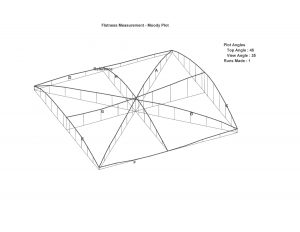
Planhetstesting har fire godkjente metoder. Elektroniske vater, autokollimering, laser og en enhet kjent som en planlokaliseringsenhet. Vi bruker kun elektroniske vater fordi de er den mest nøyaktige og raskeste metoden av flere grunner.
Lasere og autokollimatorer bruker en veldig rett lysstråle som referanse. Man foretar en retthetsmåling av en granittoverflateplate ved å sammenligne variasjonen i avstand mellom overflateplaten og lysstrålen. Ved å ta en rett lysstråle og treffe den på et reflektormål mens man beveger reflektormålet nedover overflateplaten, er avstanden mellom den utsendte strålen og returstrålen en retthetsmåling.
Her er problemet med denne metoden. Målet og kilden påvirkes av vibrasjon, omgivelsestemperatur, et mål som ikke er flatt eller ripet, forurensning i luften og luftbevegelse (strømmer). Alt dette bidrar til ytterligere feilkomponenter. Dessuten er bidraget fra operatørfeil fra kontroller med en autokollimator større.
En erfaren autokollimatorbruker kan foreta svært nøyaktige målinger, men har fortsatt problemer med konsistensen i avlesningene, spesielt over lengre avstander, ettersom refleksjonene har en tendens til å utvide seg eller bli litt uskarpe. I tillegg gir et ikke helt flatt mål og en lang dag med kikking gjennom linsen ytterligere feil.
En planlokaliseringsenhet er bare tull. Denne enheten bruker en noe rett (sammenlignet med en ekstremt rett kollimert eller laserlysstråle) som referanse. Ikke bare bruker den mekaniske enheten en indikator som vanligvis bare har en oppløsning på 20 u-tommer, men den urette stangen og ulike materialer bidrar betydelig til målefeil. Etter vår mening, selv om metoden er akseptabel, ville ingen kompetente laboratorier noen gang bruke en planlokaliseringsenhet som et instrument for endelig inspeksjon.
Elektroniske vater bruker tyngdekraften som referanse. Differensielle elektroniske vater påvirkes ikke av vibrasjoner. De har en oppløsning så lav som 0,1 buesekund, og målingene er raske, nøyaktige, og det er svært lite feilbidrag fra en erfaren operatør. Verken planlokaliseringsinstrumenter eller autokollimatorer gir datagenererte topografiske (figur 1) eller isometriske plott (figur 2) av overflaten.
Figur 2
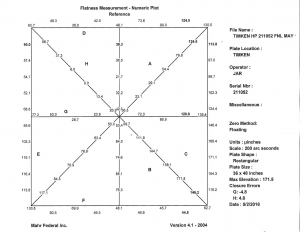
En riktig flathetstest av overflaten
En skikkelig flathetstest av overflaten er en så viktig del av denne artikkelen at jeg burde ha plassert den i begynnelsen. Som nevnt tidligere, er Fed Spec. GGG-p-463c IKKE en kalibreringsmetode. Den fungerer som en veiledning for mange aspekter ved metrologisk granitt, der den tiltenkte kjøperen er et føderalt myndighetsorgan, og det inkluderer testmetoder og toleranser eller kvaliteter. Hvis en entreprenør hevder at de har overholdt Fed Specs, skal flathetsverdien bestemmes etter Moody-metoden.
Moody var en fyr helt tilbake på 50-tallet som utviklet en matematisk metode for å bestemme den generelle flatheten og ta hensyn til retningen på de testede linjene, og om de var tilstrekkelig nære hverandre i samme plan. Ingenting har endret seg. Allied Signal prøvde å forbedre den matematiske metoden, men konkluderte med at forskjellene var så små at det ikke var verdt innsatsen.
Hvis en overflateplateentreprenør bruker elektroniske nivåer eller laser, bruker han en datamaskin for å hjelpe ham med beregningene. Uten datamaskinhjelp må teknikeren beregne avlesningene manuelt ved hjelp av autokollimering. I virkeligheten gjør de ikke det. Det tar for lang tid og kan ærlig talt være for utfordrende. I en flathetstest ved hjelp av Moody-metoden tester teknikeren åtte linjer i en Union Jack-konfigurasjon for retthet.
Moody-metoden
Moody-metoden er en matematisk måte å avgjøre om de åtte linjene er på samme plan. Ellers har du bare åtte rette linjer som kanskje ikke er på eller i nærheten av samme plan. Videre, en entreprenør som hevder å overholde Fed Spec, og bruker autokollimering, hanmågenerere åtte sider med data. Én side for hver linje som kontrolleres for å bevise testing, reparasjon eller begge deler. Ellers har entreprenøren ingen anelse om hva den reelle flathetsverdien er.
Jeg er sikker på at hvis du er en av dem som får platene dine kalibrert av en entreprenør ved hjelp av autokollimering, har du aldri sett de sidene! Figur 3 er et eksempel påbare énen side med åtte er nødvendig for å beregne den totale flatheten. En indikasjon på slik uvitenhet og ondskap er hvis rapporten din har pent avrundede tall. For eksempel 200, 400, 650 osv. En riktig beregnet verdi er et reelt tall. For eksempel 325,4 u In. Når entreprenøren bruker Moody-metoden for beregninger, og teknikeren beregner verdiene manuelt, bør du motta åtte sider med beregninger og et isometrisk plott. Det isometriske plottet viser de varierende høydene langs de forskjellige linjene og hvor mye avstand som skiller de valgte skjæringspunktene.
Figur 3(Det tar åtte sider som dette å beregne flathet manuelt. Sørg for å spørre hvorfor du ikke får dette hvis entreprenøren din bruker autokollimering!)
Figur 4
Dimensjonsmålerteknikere bruker differensialvater (figur 4) som foretrukne enheter for å måle de minste endringene i vinkel fra målestasjon til stasjon. Vaterene har en oppløsning ned til 0,1 buesekunder (5 u-tommer ved bruk av 4-tommers slede), er ekstremt stabile, påvirkes ikke av vibrasjoner, målte avstander, luftstrømmer, operatørtretthet, luftforurensning eller noen av problemene som er forbundet med andre enheter. Legg til datahjelp, og oppgaven blir relativt rask, og genererer topografiske og isometriske plott som beviser verifiseringen og, viktigst av alt, reparasjonen.
En skikkelig repeterbarhetstest
Repeterbarhetstesten er den viktigste testen. Utstyret vi bruker for å utføre repeterbarhetstesten er en repeterbarhetstest, en LVDT og en forsterker som er nødvendig for høyoppløsningsavlesninger. Vi stiller LVDT-forsterkeren til en minimumsoppløsning på 10 u-tommer eller 5 u-tommer for plater med høy nøyaktighet.
Det er verdiløst å bruke en mekanisk indikator med en oppløsning på bare 20 u-tommer hvis du prøver å teste et repeterbarhetskrav på 35 u-tommer. Indikatorer har en usikkerhet på 40 u-tommer! Oppsettet for gjentatt avlesning etterligner en høydemåler-/delkonfigurasjon.
Repeterbarhet ER IKKE det samme som generell flathet (gjennomsnittsplan). Jeg liker å tenke på repeterbarhet i granitt sett på som en konsistent radiusmåling.
Figur 5
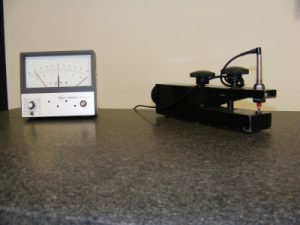
Hvis du tester repeterbarheten til en rund kule, har du vist at kulens radius ikke har endret seg. (Den ideelle profilen til en riktig reparert plate har en konveks kronet form.) Det er imidlertid tydelig at kulen ikke er flat. Vel, på en måte. På en ekstremt kort avstand er den flat. Siden mesteparten av inspeksjonsarbeidet involverer en høydemåler svært nær delen, blir repeterbarhet den viktigste egenskapen til en granittplate. Det er viktigere enn den generelle flatheten, med mindre en bruker sjekker rettheten til en lang del.
Sørg for at entreprenøren din utfører en gjentatt avlesningstest. En plate kan ha en gjentatt avlesning som er betydelig utenfor toleransen, men likevel bestå en planhetstest! Utrolig nok kan et laboratorium få akkreditering i testing som ikke inkluderer en gjentatt avlesningstest. Et laboratorium som ikke kan reparere eller ikke er veldig flink til å reparere, foretrekker å kun utføre planhetstesting. Planheten endres sjelden med mindre du flytter platen.
Gjentatt avlesningstesting er den enkleste å teste, men den vanskeligste å oppnå ved sliping. Sørg for at entreprenøren din kan gjenopprette repeterbarheten uten å "skjære" overflaten eller etterlate bølger i overflaten.
Delta T-test
Denne testen innebærer å måle steinens FAKTIske temperatur på dens øvre og nedre overflate og beregne differansen, Delta T, for rapportering på sertifikatet.
Det er viktig å vite at den gjennomsnittlige termiske utvidelseskoeffisienten i granitt er 3,5 uIn/tomme/grad. Effekten av omgivelsestemperaturer og fuktighet på en granittplate er ubetydelig. Imidlertid kan en overflateplate gå utenfor toleranseområdet eller noen ganger forbedres selv om den har en Delta T på 0,3–0,5 grader F. Det er nødvendig å vite om Delta T er innenfor 0,12 grader F fra differansen fra forrige kalibrering.
Det er også viktig å vite at en plate sin arbeidsflate beveger seg mot varme. Hvis topptemperaturen er varmere enn bunnen, stiger toppoverflaten. Hvis bunnen er varmere, noe som er sjeldent, synker toppoverflaten. Det er ikke nok for en kvalitetssjef eller tekniker å vite at platen er flat og repeterbar på tidspunktet for kalibrering eller reparasjon, men hva dens Delta T var på tidspunktet for den endelige kalibreringstestingen. I kritiske situasjoner kan en bruker, ved å måle Delta T selv, avgjøre om en plate har gått utenfor toleranseområdet utelukkende på grunn av Delta T-variasjoner. Heldigvis tar det mange timer eller til og med dager for granitt å akklimatisere seg til et miljø. Mindre svingninger i omgivelsestemperaturen i løpet av dagen vil ikke påvirke det. Av disse grunnene rapporterer vi ikke omgivelseskalibreringstemperatur eller fuktighet fordi effektene er ubetydelige.
Slitasje av granittplater
Selv om granitt er hardere enn stålplater, utvikler granitt fortsatt lave flekker på overflaten. Gjentatt bevegelse av deler og målere på overflateplaten er den største kilden til slitasje, spesielt hvis det samme området er i konstant bruk. Smuss og slipestøv som blir liggende igjen på en plateoverflate, fremskynder slitasjeprosessen når det kommer mellom deler eller målere og granittoverflaten. Når deler og målere flyttes over overflaten, er slipestøv vanligvis årsaken til ytterligere slitasje. Jeg anbefaler på det sterkeste konstant rengjøring for å redusere slitasje. Vi har sett slitasje på plater forårsaket av daglige UPS-pakkeleveranser plassert oppå plater! Disse lokaliserte slitasjeområdene påvirker kalibreringens repeterbarhetstestavlesninger. Unngå slitasje ved å rengjøre regelmessig.
Rengjøring av granittplater
For å holde platen ren, bruk en klut for å fjerne smuss. Bare trykk veldig lett, slik at du ikke etterlater limrester. En godt brukt klut gjør en utmerket jobb med å samle opp slipestøv mellom rengjøringer. Ikke arbeid på samme sted. Flytt oppsettet rundt platen, og fordel slitasjen. Det er greit å bruke alkohol til å rengjøre en plate, men vær oppmerksom på at dette midlertidig vil avkjøle overflaten. Vann med en liten mengde såpe er utmerket. Kommersielt tilgjengelige rengjøringsmidler som Starretts rengjøringsmiddel er også utmerkede å bruke, men sørg for at du får alle såperester av overflaten.
Reparasjon av granittplater
Det burde nå være tydelig hvor viktig det er å sørge for at overflateplateleverandøren din utfører en kompetent kalibrering. «Clearing House»-laboratorier som tilbyr «Gjør alt med én samtale»-programmer har sjelden en tekniker som kan utføre reparasjoner. Selv om de tilbyr reparasjoner, har de ikke alltid en tekniker som har den nødvendige erfaringen når overflateplaten er betydelig utenfor toleranse.
Hvis du får beskjed om at en plate ikke kan repareres på grunn av ekstrem slitasje, ring oss. Sannsynligvis kan vi reparere den.
Våre teknikere har læretid på ett til halvannet år under en mesterplatetekniker. Vi definerer en mesterplatetekniker som noen som har fullført læretiden sin og har over ti års ekstra erfaring med kalibrering og reparasjon av overflateplater. Vi hos Dimensional Gauge har tre mesterteknikere ansatt med over 60 års erfaring til sammen. En av våre mesterteknikere er tilgjengelig til enhver tid for støtte og veiledning når vanskelige situasjoner oppstår. Alle våre teknikere har erfaring med kalibrering av overflateplater i alle størrelser, fra små til svært store, varierende miljøforhold, ulike bransjer og store slitasjeproblemer.
Fed-spesifikasjoner har et spesifikt finishkrav på 16 til 64 gjennomsnittlig aritmetisk ruhet (AA). Vi foretrekker en finish i området 30–35 AA. Det er akkurat nok ruhet til å sikre at deler og målere beveger seg jevnt og ikke fester seg eller vrir seg til overflateplaten.
Når vi reparerer, inspiserer vi platen for riktig montering og vater. Vi bruker en tørrlappingsmetode, men i tilfeller av ekstrem slitasje som krever betydelig fjerning av granitt, våtlapper vi. Våre teknikere rydder opp etter seg. De er grundige, raske og presise. Det er viktig fordi kostnadene for granittplateservice inkluderer nedetid og tapt produksjon. En kompetent reparasjon er av største betydning, og du bør aldri velge en entreprenør basert på pris eller bekvemmelighet. Noe kalibreringsarbeid krever høyt trente personer. Det har vi.
Endelige kalibreringsrapporter
For hver reparasjon og kalibrering av overflateplater tilbyr vi detaljerte profesjonelle rapporter. Rapportene våre inneholder en betydelig mengde både kritisk og relevant informasjon. Fed Spec. krever mesteparten av informasjonen vi har oppgitt. Med unntak av informasjonen som finnes i andre kvalitetsstandarder som ISO/IEC-17025, er minimumskravene til Fed Spec. for rapporter:
- Størrelse i fot (X' x X')
- Farge
- Stil (Refererer til avsatser uten klemme eller to eller fire avsatser)
- Estimert elastisitetsmodul
- Gjennomsnittlig plantoleranse (bestemt av grad/størrelse)
- Toleranse for gjentatt avlesning (bestemmes av diagonallengde i tommer)
- Gjennomsnittsplan som funnet
- Gjennomsnittsplan som venstre
- Gjenta lesingen som funnet
- Gjenta lesingen som til venstre
- Delta T (Temperaturforskjell mellom topp- og bunnflater)
Hvis teknikeren trenger å utføre sliping eller reparasjonsarbeid på overflateplaten, ledsages kalibreringssertifikatet av et topografisk eller isometrisk plott for å bevise en gyldig reparasjon.
Et ord om ISO/IEC-17025-akkrediteringer og laboratoriene som har dem
Bare fordi et laboratorium er akkreditert innen kalibrering av overflateplater, betyr det ikke nødvendigvis at de vet hva de gjør, og enda mindre at de gjør det riktig! Det betyr heller ikke nødvendigvis at laboratoriet kan reparere. Akkrediteringsorganene skiller ikke mellom verifisering og kalibrering (reparasjon).Aog jeg vet om en, kanskje2akkrediteringsorganer som vilLslipsAbånd rundt hunden min hvis jeg betalte dem nok penger! Det er et trist faktum. Jeg har sett laboratorier få akkreditering ved å bare utføre én av de tre testene som kreves. Dessuten har jeg sett laboratorier få akkreditering med urealistiske usikkerheter og bli akkreditert uten bevis eller demonstrasjon av hvordan de beregnet verdiene. Det er alt sammen uheldig.
Oppsummering
Du kan ikke undervurdere rollen til presisjonsgranittplater. Den flate referansen som granittplatene gir, er grunnlaget du foretar alle andre målinger på.
Du kan bruke de mest moderne, nøyaktige og allsidige måleinstrumentene. Det er imidlertid vanskelig å fastslå nøyaktige målinger hvis referanseoverflaten ikke er flat. En gang sa en potensiell kunde til meg: «Vel, det er bare stein!» Mitt svar var: «OK, du har rett, og du kan definitivt ikke rettferdiggjøre at eksperter kommer inn for å vedlikeholde overflateplatene dine.»
Pris er aldri en god grunn til å velge entreprenører for overflateplater. Innkjøpere, regnskapsførere og et urovekkende antall kvalitetsingeniører forstår ikke alltid at resertifisering av granittplater ikke er som å resertifisere et mikrometer, skyvelær eller et DMM.
Noen instrumenter krever ekspertise, ikke en lav pris. Når det er sagt, er prisene våre svært rimelige. Spesielt for å ha tillit til at vi utfører arbeidet riktig. Vi går langt utover ISO-17025 og føderale spesifikasjonskrav i merverdi.
Overflateplater er grunnlaget for mange dimensjonsmålinger, og det er nødvendig å ta vare på overflateplaten for å sikre målenøyaktighet.
Granitt er det mest populære materialet som brukes til overflateplater på grunn av dets ideelle fysiske egenskaper, som overflatehardhet og lav følsomhet for temperatursvingninger. Ved kontinuerlig bruk vil imidlertid overflateplater oppleve slitasje.
Planhet og repeterbarhet er begge kritiske aspekter for å avgjøre om en plate gir en presis overflate for å oppnå nøyaktige målinger. Toleransene for begge aspektene er definert under føderal spesifikasjon GGG-P-463C, DIN, GB, JJS... Planhet er målingen av avstanden mellom det høyeste punktet (takplanet) og det laveste punktet (basisplanet) på platen. Repeterbarhet bestemmer om en måling tatt fra ett område kan gjentas over hele platen innenfor den angitte toleransen. Dette sikrer at det ikke er noen topper eller daler i platen. Hvis avlesningene ikke er innenfor de angitte retningslinjene, kan det være nødvendig med ny overflatebehandling for å bringe målingene tilbake til spesifikasjonen.
Rutinemessig kalibrering av overflateplater er nødvendig for å sikre flathet og repeterbarhet over tid. Presisjonsmålingsgruppen hos Cross er ISO 17025-akkreditert for kalibrering av overflateplaters flathet og repeterbarhet. Vi bruker Mahr Surface Plate Certification System som inneholder:
- Humør- og profilanalyse,
- Isometriske eller numeriske plott,
- Gjennomsnitt for flere løp, og
- Automatisk gradering i henhold til bransjestandarder.
Mahrs dataassisterte modell bestemmer ethvert vinkel- eller lineært avvik fra absolutt nivå, og er ideelt egnet for svært presis profilering av overflateplater.
Intervallene mellom kalibreringene vil variere avhengig av bruksfrekvens, miljøforholdene der platen befinner seg og de spesifikke kvalitetskravene til bedriften din. Riktig vedlikehold av overflateplaten kan gi lengre intervaller mellom hver kalibrering, hjelpe deg med å unngå merkostnaden ved ny kalibrering, og viktigst av alt sikrer at målingene du får på platen er så nøyaktige som mulig. Selv om overflateplater virker robuste, er de presisjonsinstrumenter og bør behandles deretter. Her er noen ting du bør vurdere når det gjelder vedlikehold av overflateplatene dine:
- Hold tallerkenen ren, og dekk den til om mulig når den ikke er i bruk
- Ingenting skal plasseres på platen annet enn måleinstrumenter eller deler som skal måles.
- Ikke bruk samme sted på tallerkenen hver gang.
- Hvis mulig, roter platen med jevne mellomrom.
- Respekter lastegrensen på tallerkenen din
Presisjonsgranittbase kan forbedre maskinverktøyets ytelse
Kravene øker stadig innen maskinteknikk generelt og spesielt innen maskinverktøykonstruksjon. Å oppnå maksimal presisjon og ytelsesverdier uten å øke kostnadene er en konstant utfordring for å være konkurransedyktig. Maskinverktøybunnen er en avgjørende faktor her. Derfor er stadig flere maskinverktøyprodusenter avhengige av granitt. På grunn av dens fysiske parametere gir den klare fordeler som ikke kan oppnås med stål eller polymerbetong.
Granitt er en såkalt vulkansk dypbergart og har en svært tett og homogen struktur med ekstremt lav utvidelseskoeffisient, lav varmeledningsevne og høy vibrasjonsdemping.
Nedenfor vil du oppdage hvorfor den vanlige oppfatningen om at granitt hovedsakelig bare er egnet som maskinbase for avanserte koordinatmålemaskiner, for lengst er utdatert, og hvorfor dette naturlige materialet som maskinbase er et svært fordelaktig alternativ til stål eller støpejern, selv for høypresisjonsmaskiner.
Vi kan produsere granittkomponenter for dynamisk bevegelse, granittkomponenter for lineære motorer, granittkomponenter for NDT, granittkomponenter for røntgen, granittkomponenter for CMM, granittkomponenter for CNC, granittpresisjon for laser, granittkomponenter for luftfart, granittkomponenter for presisjonstrinn...
Høy merverdi uten ekstra kostnader
Den økende bruken av granitt i maskinteknikk skyldes ikke så mye den massive økningen i stålprisen. Snarere skyldes det at merverdien for maskinverktøyet oppnådd med et maskinbord laget av granitt er mulig til svært liten eller ingen ekstra kostnad. Dette bevises av kostnadssammenligninger av kjente maskinverktøyprodusenter i Tyskland og Europa.
Den betydelige gevinsten i termodynamisk stabilitet, vibrasjonsdemping og langsiktig presisjon som granitt muliggjør, kan ikke oppnås med et støpejerns- eller stållag, eller bare til relativt høye kostnader. For eksempel kan termiske feil utgjøre opptil 75 % av den totale feilen til en maskin, og kompensasjon forsøkes ofte med programvare – med moderat suksess. På grunn av sin lave varmeledningsevne er granitt et bedre grunnlag for langsiktig presisjon.
Med en toleranse på 1 μm oppfyller granitt lett kravene til planhet i henhold til DIN 876 for nøyaktighetsgrad 00. Med en verdi på 6 på hardhetsskalaen 1 til 10 er den ekstremt hard, og med sin spesifikke vekt på 2,8 g/cm³ når den nesten verdien til aluminium. Dette resulterer også i ytterligere fordeler som høyere matehastigheter, høyere akseakselerasjoner og en forlengelse av verktøyets levetid for skjæremaskiner. Dermed flytter overgangen fra et støpt bed til et granittmaskinbed det aktuelle maskinverktøyet inn i high-end-klassen når det gjelder presisjon og ytelse – uten ekstra kostnad.
Granittens forbedrede økologiske fotavtrykk
I motsetning til materialer som stål eller støpejern, trenger ikke naturstein å produseres med mye energi og tilsetningsstoffer. Bare relativt små mengder energi kreves for utvinning og overflatebehandling. Dette resulterer i et bedre økologisk fotavtrykk, som selv ved slutten av en maskins levetid overgår stålets som materiale. Granittlaget kan være grunnlaget for en ny maskin eller brukes til helt andre formål, som for eksempel makulering til veibygging.
Det er heller ingen mangel på ressurser for granitt. Det er en dyp bergart dannet av magma i jordskorpen. Den har «modnet» i millioner av år og er tilgjengelig i svært store mengder som en naturressurs på nesten alle kontinenter, inkludert hele Europa.
Konklusjon: De mange påviselige fordelene med granitt sammenlignet med stål eller støpejern rettferdiggjør den økende viljen til maskiningeniører til å bruke dette naturlige materialet som grunnlag for høypresisjons- og høytytende maskinverktøy. Detaljert informasjon om granittegenskaper, som er fordelaktige for maskinverktøy og maskinteknikk, finnes i denne videre artikkelen.
En gjentatt måling er en måling av lokale flathetsområder. Spesifikasjonen for gjentatt måling sier at en måling tatt hvor som helst på overflaten av en plate vil gjentas innenfor den angitte toleransen. Å kontrollere den lokale flatheten til et tettere nivå enn den generelle flatheten garanterer en gradvis endring i overflatens flathetsprofil, og minimerer dermed lokale feil.
De fleste produsenter, inkludert importerte merker, følger den føderale spesifikasjonen for generelle flathetstoleranser, men mange overser gjentakelsesmålingene. Mange av de lavpris- eller budsjettplatene som er tilgjengelige på markedet i dag, garanterer ikke gjentakelsesmålinger. En produsent som ikke garanterer gjentakelsesmålinger, produserer IKKE plater som oppfyller kravene i ASME B89.3.7-2013 eller føderal spesifikasjon GGG-P-463c, eller DIN 876, GB, JJS...
Begge er avgjørende for å sikre en presisjonsoverflate for nøyaktige målinger. Planhetsspesifikasjon alene er ikke tilstrekkelig for å garantere målenøyaktighet. Ta som et eksempel en 36 x 48 inspeksjonsgrad A-overflateplate, som KUN oppfyller planhetsspesifikasjonen på 0,000300". Hvis stykket som kontrolleres overlapper flere topper, og måleren som brukes er på et lavt punkt, kan målefeilen være full toleranse i ett område, 0,00300". Faktisk kan den være mye høyere hvis måleren hviler på skråningen.
Feil på 0,000600"–0,000800" er mulige, avhengig av hvor alvorlig helningen er og armlengden på måleren som brukes. Hvis denne platen hadde en spesifikasjon for gjentatt måling på 0,000050"FIR, ville målefeilen være mindre enn 0,000050" uavhengig av hvor målingen tas på platen. Et annet problem, som vanligvis oppstår når en utrent tekniker prøver å gi en plate ny overflate på stedet, er bruken av gjentatte målinger alene for å sertifisere en plate.
Instrumentene som brukes til å verifisere repeterbarhet er IKKE designet for å kontrollere den generelle flatheten. Når de er satt til null på en perfekt buet overflate, vil de fortsette å vise null, enten overflaten er perfekt flat, perfekt konkav eller konveks 1/2"! De verifiserer bare overflatens ensartethet, ikke flatheten. Bare en plate som oppfyller både flathetsspesifikasjonen OG spesifikasjonen for gjentatt måling, oppfyller virkelig kravene i ASME B89.3.7-2013 eller Federal Specification GGG-P-463c.
Ask us about or flatness specification and repeat measurement promise by calling +86 19969991659 or emailing INFO@ZHHIMG.COM
Ja, men de kan bare garanteres for en spesifikk vertikal temperaturgradient. Effektene av termisk ekspansjon på platen kan lett forårsake en endring i nøyaktighet som er større enn toleransen hvis det er en endring i gradienten. I noen tilfeller, hvis toleransen er stram nok, kan varmen som absorberes fra takbelysning forårsake en tilstrekkelig gradientendring over flere timer.
Granitt har en termisk utvidelseskoeffisient på omtrent 0,0000035 tommer per tomme per 1 °F. Som et eksempel: En overflateplate på 36" x 48" x 8" har en nøyaktighet på 0,000075" (1/2 av grad AA) ved en gradient på 0 °F, der toppen og bunnen har samme temperatur. Hvis toppen av platen varmes opp til et punkt der den er 1 °F varmere enn bunnen, vil nøyaktigheten endres til 0,000275" konveks! Derfor bør det bare vurderes å bestille en plate med en toleranse som er strengere enn laboratoriegrad AA hvis det er tilstrekkelig klimakontroll.
En overflateplate bør støttes på tre punkter, ideelt sett plassert 20 % av lengden inn fra endene av platen. To støtter bør plasseres 20 % av bredden inn fra langsidene, og den gjenværende støtten bør være sentrert. Bare tre punkter kan hvile solid på noe annet enn en presisjonsoverflate.
Platen skal støttes på disse punktene under produksjon, og den skal kun støttes på disse tre punktene under bruk. Hvis du prøver å støtte platen på mer enn tre punkter, vil platen motta støtte fra forskjellige kombinasjoner av tre punkter, som ikke vil være de samme tre punktene som den ble støttet på under produksjonen. Dette vil føre til feil ettersom platen bøyer seg for å tilpasse seg det nye støttearrangementet. Alle zhhimg-stålstativer har støttebjelker som er utformet for å være på linje med de riktige støttepunktene.
Hvis platen er riktig støttet, er presis nivellering bare nødvendig hvis bruksområdet krever det. Nivellering er ikke nødvendig for å opprettholde nøyaktigheten til en riktig støttet plate.
Hvorfor velge granitt tilMaskinbaserogMålekomponenter?
Svaret er «ja» for nesten alle bruksområder. Fordelene med granitt inkluderer: Ingen rust eller korrosjon, nesten immun mot vridning, ingen kompenserende hump ved hakk, lengre levetid, jevnere drift, større presisjon, praktisk talt ikke-magnetisk, lav termisk utvidelseskoeffisient og lave vedlikeholdskostnader.
Granitt er en type magmatisk bergart som utvinnes for sin ekstreme styrke, tetthet, holdbarhet og korrosjonsmotstand. Men granitt er også svært allsidig – den er ikke bare for firkanter og rektangler! Faktisk jobber Starrett Tru-Stone regelmessig med granittkomponenter konstruert i former, vinkler og kurver i alle varianter – med utmerkede resultater.
Takket være vår toppmoderne prosessering kan kuttede overflater bli usedvanlig flate. Disse egenskapene gjør granitt til det ideelle materialet for å lage maskinbaser og målekomponenter i spesialstørrelse og -design. Granitt er:
maskinbar
nøyaktig flat når den er kuttet og ferdig
rustbestandig
varig
langvarig
Granittkomponenter er også enkle å rengjøre. Når du lager spesialtilpassede design, sørg for å velge granitt på grunn av dens overlegne fordeler.
STANDARDER/ BRUKSOMRÅDER MED HØY SLITASJE
Granitten som ZhongHui bruker til våre standard overflateplateprodukter har et høyt kvartsinnhold, noe som gir større motstand mot slitasje og skader. Våre farger Superior Black og Crystal Pink har lav vannabsorpsjon, noe som minimerer muligheten for at presisjonsmålerne dine ruster når de festes på platene. Granittfargene som ZhongHui tilbyr, resulterer i mindre gjenskinn, noe som betyr mindre øyebelastning for personer som bruker platene. Vi har valgt granitttypene våre med tanke på termisk ekspansjon for å holde dette aspektet minimalt.
TILPASSEDE APPLIKASJONER
Når applikasjonen din krever en plate med tilpassede former, gjengede innlegg, spor eller annen maskinering, bør du velge et materiale som svart diabas. Dette naturlige materialet gir overlegen stivhet, utmerket vibrasjonsdemping og forbedret maskinbearbeidbarhet.
Ja, hvis de ikke er for slitte. Våre fabrikkinnstillinger og utstyr gir optimale forhold for riktig platekalibrering og omarbeiding om nødvendig. Vanligvis, hvis en plate er innenfor 0,001 tommer av den nødvendige toleransen, kan den overflatebehandles på stedet. Hvis en plate er slitt til det punktet at den er mer enn 0,001 tommer utenfor toleransen, eller hvis den er sterkt gropt eller hakket, må den sendes til fabrikken for sliping før ny sliping.
Det bør utvises stor forsiktighet når man velger en tekniker for kalibrering og overflatebehandling på stedet. Vi oppfordrer deg til å være forsiktig når du velger kalibreringstjeneste. Be om akkreditering og bekreft at utstyret teknikeren skal bruke har sporbar kalibrering fra en nasjonal inspeksjonsinstitusjon. Det tar mange år å lære hvordan man sliper presisjonsgranitt riktig.
ZhongHui tilbyr rask behandlingstid på kalibreringer utført i fabrikken vår. Send platene dine inn for kalibrering hvis mulig. Kvaliteten og omdømmet ditt avhenger av nøyaktigheten til måleinstrumentene dine, inkludert overflateplatene!
Våre svarte overflateplater har en betydelig høyere tetthet og er opptil tre ganger så stive. Derfor trenger ikke en plate laget av svart være like tykk som en granittplate av samme størrelse for å ha lik eller større motstand mot nedbøyning. Redusert tykkelse betyr mindre vekt og lavere fraktkostnader.
Vær oppmerksom på andre som bruker svart granitt av lavere kvalitet i samme tykkelse. Som nevnt ovenfor varierer egenskapene til granitt, som tre eller metall, etter materiale og farge, og er ikke en nøyaktig indikator på stivhet, hardhet eller slitestyrke. Faktisk er mange typer svart granitt og diabas svært myke og ikke egnet for overflateplateapplikasjoner.
Nei. Det spesialiserte utstyret og opplæringen som er nødvendig for å omarbeide disse elementene krever at de returneres til fabrikken for kalibrering og omarbeiding.
Ja. Keramikk og granitt har lignende egenskaper, og metodene som brukes til å kalibrere og slipe granitt kan også brukes med keramiske gjenstander. Keramikk er vanskeligere å slipe enn granitt, noe som resulterer i en høyere kostnad.
Ja, forutsatt at innleggene er forsenket under overflaten. Hvis stålinnsatser er i flukt med eller over overflateplanet, må de punktvis slises ned før platen kan overlappes. Om nødvendig kan vi tilby denne tjenesten.
Ja. Stålinnsatser med ønsket gjenge (engelsk eller metrisk) kan epoxylimes inn i platen på ønskede steder. ZhongHui bruker CNC-maskiner for å gi de tetteste innsatsplasseringene innenfor +/- 0,005 tommer. For mindre kritiske innsatser er vår plasseringstoleranse for gjengede innsatser ±0,060 tommer. Andre alternativer inkluderer stål-T-stenger og svalehalespor maskinert direkte inn i granitten.
Innsatser som er riktig bundet med høyfast epoksy og godt håndverk, vil tåle mye torsjons- og skjærkraft. I en nylig test, med 3/8"-16 gjengede innsatser, målte et uavhengig testlaboratorium kraften som kreves for å trekke en epoksybundet innsats fra en overflateplate. Ti plater ble testet. Av disse ti, i ni tilfeller, brakk granitten først. Gjennomsnittlig belastning ved bruddpunktet var 10 020 lbs. for grå granitt og 12 310 lbs. for svart. I det ene tilfellet der en innsats ble løsnet fra platen, var belastningen ved bruddpunktet 12 990 lbs.! Hvis et arbeidsstykke danner en bro over innsatsen og ekstremt dreiemoment påføres, er det mulig å generere nok kraft til å sprekke granitten. Delvis av denne grunn gir ZhongHui retningslinjer for maksimalt sikkert dreiemoment som kan påføres epoksybundne innsatser: https://www.zhhimg.com/standard-thread-inserts-product/
Ja, men bare på fabrikken vår. På fabrikken vår kan vi restaurere nesten alle plater til «som nye» stand, vanligvis for mindre enn halvparten av kostnaden ved å erstatte dem. Skadede kanter kan lappes kosmetisk, dype spor, hakk og groper kan slipes ut, og de vedlagte støttene kan byttes ut. I tillegg kan vi modifisere platen din for å øke allsidigheten ved å legge til solide eller gjengede stålinnsatser og skjære spor eller klemmekanter, i henhold til dine spesifikasjoner.
Hvorfor velge granitt?
Granitt er en type magmatisk bergart som ble dannet i jorden for millioner av år siden. Sammensetningen av magmatisk bergart inneholdt mange mineraler som kvarts, som er ekstremt hard og slitesterk. I tillegg til hardhet og slitestyrke har granitt omtrent halvparten så stor utvidelseskoeffisient som støpejern. Siden dens volumetriske vekt er omtrent en tredjedel av støpejerns, er granitt lettere å manøvrere.
For maskinbaser og målekomponenter er svart granitt den mest brukte fargen. Svart granitt har en høyere prosentandel kvarts enn andre farger og er derfor den mest slitesterke.
Granitt er kostnadseffektivt, og kuttede overflater kan bli usedvanlig flate. Ikke bare kan den slipes for hånd for å oppnå ekstrem nøyaktighet, men rekonditioneringen kan utføres uten å flytte platen eller bordet vekk fra stedet. Det er en fullstendig manuell slipeoperasjon og koster vanligvis mye mindre enn rekonditionering av et støpejernsalternativ.
Disse egenskapene gjør granitt til det ideelle materialet for å lage maskinbaser og målekomponenter i spesialstørrelse og -design, som for eksempelgranitt overflateplate.
ZhongHui produserer skreddersydde granittprodukter som er laget for å støtte spesifikke målekrav. Disse skreddersydde varene varierer frarette kanter totri-kvadraterPå grunn av granittens allsidige natur,komponenterkan produseres i alle nødvendige størrelser; de er slitesterke og holdbare.
Fordeler med granittoverflateplater
Viktigheten av å måle på en jevn overflate ble etablert av den britiske oppfinneren Henry Maudsley på 1800-tallet. Som en innovatør innen maskinverktøy bestemte han seg for at jevn produksjon av deler krevde en solid overflate for pålitelige målinger.
Den industrielle revolusjonen skapte en etterspørsel etter måleflater, så ingeniørselskapet Crown Windley skapte produksjonsstandarder. Standardene for overflateplater ble først satt av Crown i 1904 ved bruk av metall. Etter hvert som etterspørselen og kostnadene for metall økte, ble alternative materialer for måleflater undersøkt.
I Amerika slo monumentskaperen Wallace Herman fast at svart granitt var et utmerket alternativ til metall som overflateplate. Siden granitt ikke er magnetisk og ikke ruster, ble den snart den foretrukne måleflaten.
En granittoverflateplate er en viktig investering for laboratorier og testfasiliteter. En granittoverflateplate på 600 x 600 mm kan monteres på et støttestativ. Stativene gir en arbeidshøyde på 34 tommer (0,86 m) med fem justerbare punkter for nivellering.
For pålitelige og konsistente måleresultater er en granittoverflateplate avgjørende. Siden overflaten er glatt og stabil, gjør den det mulig å manipulere instrumenter nøye.
De viktigste fordelene med granittoverflateplater er:
• Ikke-reflekterende
• Motstandsdyktig mot kjemikalier og korrosjon
• Lav utvidelseskoeffisient sammenlignet med vognjern, så den påvirkes mindre av temperaturendringer
• Naturlig stiv og slitesterk
• Overflateplanet påvirkes ikke av riper
• Vil ikke ruste
• Ikke-magnetisk
• Lett å rengjøre og vedlikeholde
• Kalibrering og overflatebehandling kan gjøres på stedet
• Egnet for boring for gjengede støtteinnsatser
• Høy vibrasjonsdemping
For mange verksteder, inspeksjonsrom og laboratorier brukes presisjonsgranittoverflateplater som grunnlag for nøyaktig måling. Fordi hver lineær måling avhenger av en nøyaktig referanseflate som de endelige dimensjonene tas fra, gir overflateplater det beste referanseplanet for arbeidsinspeksjon og layout før maskinering. De er også ideelle grunnlag for å foreta høydemålinger og måle overflater. Videre gjør en høy grad av flathet, stabilitet, generell kvalitet og utførelse dem til et godt valg for montering av sofistikerte mekaniske, elektroniske og optiske målesystemer. For alle disse måleprosessene er det viktig å holde overflateplatene kalibrert.
Gjenta målinger og flathet
Både planhet og gjentatte målinger er avgjørende for å sikre en presisjonsoverflate. Planhet kan betraktes som at alle punkter på overflaten er innenfor to parallelle plan, basisplanet og takplanet. Målingen av avstanden mellom planene er overflatens totale planhet. Denne planhetsmålingen har vanligvis en toleranse og kan inkludere en karakterbetegnelse.
Flathetstoleransene for tre standardkvaliteter er definert i den føderale spesifikasjonen som bestemt av følgende formel:
Laboratoriekvalitet AA = (40 + diagonal² / 25) x 0,000001 tomme (ensidig)
Inspeksjonsgrad A = Laboratoriegrad AA x 2
Verktøyrom Grad B = Laboratorium Grad AA x 4
I tillegg til flathet må repeterbarhet sikres. En gjentatt måling er en måling av lokale flathetsområder. Det er en måling tatt hvor som helst på overflaten av en plate som vil gjentas innenfor den angitte toleransen. Å kontrollere lokal flathet til en strengere toleranse enn den generelle flatheten garanterer en gradvis endring i overflatens flathetsprofil, og minimerer dermed lokale feil.
For å sikre at en overflateplate oppfyller både spesifikasjonene for flathet og gjentatte målinger, bør produsenter av granittoverflateplater bruke den føderale spesifikasjonen GGG-P-463c som grunnlag for sine spesifikasjoner. Denne standarden omhandler nøyaktighet for gjentatte målinger, materialegenskaper til granittoverflateplater, overflatefinish, plassering av støttepunkter, stivhet, akseptable inspeksjonsmetoder og installasjon av gjengede innsatser.
Før en overflateplate er slitt utover spesifikasjonen for generell flathet, vil den vise slitte eller bølgete stenger. Månedlig inspeksjon for gjentatte målefeil ved bruk av en gjentatt avlesningsmåler vil identifisere slitasjepunkter. En gjentatt avlesningsmåler er et høypresisjonsinstrument som oppdager lokale feil og kan vises på en elektronisk forsterker med høy forstørrelse.
Kontrollerer platens nøyaktighet
Ved å følge noen få enkle retningslinjer, bør en investering i en granittoverflateplate vare i mange år. Avhengig av platenes bruk, verkstedmiljø og nødvendig nøyaktighet, varierer hyppigheten av kontroll av overflateplatens nøyaktighet. En generell tommelfingerregel er at en ny plate skal gjennomgå en fullstendig rekalibrering innen ett år etter kjøp. Hvis platen brukes ofte, anbefales det å forkorte dette intervallet til seks måneder.
Før en overflateplate er slitt utover spesifikasjonen for generell flathet, vil den vise slitte eller bølgete stenger. Månedlig inspeksjon for gjentatte målefeil ved bruk av en gjentatt avlesningsmåler vil identifisere slitasjepunkter. En gjentatt avlesningsmåler er et høypresisjonsinstrument som oppdager lokale feil og kan vises på en elektronisk forsterker med høy forstørrelse.
Et effektivt inspeksjonsprogram bør inkludere regelmessige kontroller med en autokollimator, som gir faktisk kalibrering av den totale flatheten sporbar til National Institute of Standards and Technology (NIST). Omfattende kalibrering av produsenten eller et uavhengig selskap er nødvendig fra tid til annen.
Variasjoner mellom kalibreringer
I noen tilfeller er det variasjoner mellom kalibreringene av overflateplatene. Noen ganger kan faktorer som overflateforandringer som følge av slitasje, feil bruk av inspeksjonsutstyr eller bruk av ukalibrert utstyr forklare disse variasjonene. De to vanligste faktorene er imidlertid temperatur og støtte.
En av de viktigste variablene er temperaturen. For eksempel kan overflaten ha blitt vasket med en varm eller kald løsning før kalibrering og ikke fått tilstrekkelig tid til å normalisere seg. Andre årsaker til temperaturendringer inkluderer trekk av kald eller varm luft, direkte sollys, takbelysning eller andre kilder til strålevarme på overflaten av platen.
Det kan også være variasjoner i den vertikale temperaturgradienten mellom vinter og sommer. I noen tilfeller får ikke platen tilstrekkelig tid til å normalisere seg etter forsendelse. Det er lurt å registrere den vertikale gradienttemperaturen når kalibreringen utføres.
En annen vanlig årsak til kalibreringsvariasjon er en plate som er feil støttet. En overflateplate bør støttes på tre punkter, ideelt sett plassert 20 % av lengden inn fra endene av platen. To støtter bør plasseres 20 % av bredden inn fra langsidene, og den gjenværende støtten bør være sentrert.
Bare tre punkter kan hvile solid på noe annet enn en presisjonsoverflate. Hvis du prøver å støtte platen på mer enn tre punkter, vil platen motta støtte fra forskjellige kombinasjoner av tre punkter, som ikke vil være de samme tre punktene som den ble støttet på under produksjonen. Dette vil føre til feil ettersom platen bøyer seg for å tilpasse seg det nye støttearrangementet. Vurder å bruke stålstativer med støttebjelker som er utformet for å være på linje med de riktige støttepunktene. Stativer for dette formålet er vanligvis tilgjengelige fra produsenten av overflateplaten.
Hvis platen er riktig støttet, er presis nivellering bare nødvendig hvis en applikasjon spesifiserer det. Nivellering er ikke nødvendig for å opprettholde nøyaktigheten til en riktig støttet plate.
Det er viktig å holde platen ren. Luftbårent slipemiddel er vanligvis den største kilden til slitasje på en plate, da det har en tendens til å sette seg fast i arbeidsstykker og kontaktflatene til målere. Dekk til platene for å beskytte dem mot støv og skader. Slitetiden kan forlenges ved å dekke til platen når den ikke er i bruk.
Forleng platens levetid
Å følge noen få retningslinjer vil redusere slitasje på en granittoverflateplate og til slutt forlenge levetiden.
Først er det viktig å holde platen ren. Luftbårent slipemiddel er vanligvis den største kilden til slitasje på en plate, ettersom det har en tendens til å sette seg fast i arbeidsstykker og kontaktflatene til målere.
Det er også viktig å dekke til platene for å beskytte dem mot støv og skader. Levetiden kan forlenges ved å dekke til platen når den ikke er i bruk.
Roter platen med jevne mellomrom, slik at et enkelt område ikke blir overbelastet. Det anbefales også å bytte ut stålkontaktputer på måleinstrumenter med hardmetallputer.
Unngå å sette mat eller brus på tallerkenen. Mange brus inneholder enten kullsyre eller fosforsyre, som kan løse opp de mykere mineralene og etterlate små groper i overflaten.
Hvor man skal få tilbakefall
Når en granittplate trenger ny overflatebehandling, bør du vurdere om du skal få denne tjenesten utført på stedet eller på kalibreringsanlegget. Det er alltid å foretrekke å få platen slipt på nytt på fabrikken eller et dedikert anlegg. Hvis platen imidlertid ikke er for slitt, vanligvis innenfor 0,001 tommer av den nødvendige toleransen, kan den bli slipt på nytt på stedet. Hvis en plate er slitt til det punktet at den er mer enn 0,001 tommer utenfor toleransen, eller hvis den er sterkt gropt eller hakket, bør den sendes til fabrikken for sliping før ny sliping.
Et kalibreringsanlegg har utstyret og fabrikkinnstillingene som gir optimale forhold for riktig platekalibrering og omarbeiding om nødvendig.
Det bør utvises stor forsiktighet ved valg av en tekniker for kalibrering og overflatebehandling på stedet. Be om akkreditering og bekreft at utstyret teknikeren skal bruke har en NIST-sporbar kalibrering. Erfaring er også en viktig faktor, da det tar mange år å lære å slipe presisjonsgranitt riktig.
Kritiske målinger starter med en presisjons granittoverflateplate som et grunnlag. Ved å sikre en pålitelig referanse ved å bruke en riktig kalibrert overflateplate, har produsenter et av de viktigste verktøyene for pålitelige målinger og deler av bedre kvalitet.
Sjekkliste for kalibreringsvariasjoner
- Overflaten ble vasket med en varm eller kald løsning før kalibrering og fikk ikke tilstrekkelig tid til å normalisere seg.
- Platen er ikke støttet riktig.
- Temperaturendring.
- Utkast.
- Direkte sollys eller annen strålevarme på overflaten av platen. Sørg for at takbelysning ikke varmer opp overflaten.
- Variasjoner i den vertikale temperaturgradienten mellom vinter og sommer. Hvis det er mulig, kjenn den vertikale gradienttemperaturen når kalibreringen utføres.
- Platen fikk ikke tilstrekkelig tid til å normalisere seg etter forsendelse.
- Feil bruk av inspeksjonsutstyr eller bruk av ukalibrert utstyr.
- Overflateforandring som følge av slitasje.
Tekniske tips
Fordi hver lineær måling avhenger av en nøyaktig referanseflate som de endelige dimensjonene tas fra, gir overflateplater det beste referanseplanet for arbeidsinspeksjon og layout før maskinering.
Å kontrollere den lokale flatheten til en strengere toleranse enn den generelle flatheten garanterer en gradvis endring i overflatens flathetsprofil, og minimerer dermed lokale feil.